Games Classic tables, live variations, and practical reading to compare options before playing.
Strategy Clear editorial criteria to observe rules, pace, volatility, and the context of each title.
Responsible Content aimed at adults, with a focus on mindful choices and personal limits.
Updates Reads about bonuses, promotions, live casino, slots, and sports in one place.
esportebet

Table games with clear reading, useful comparison, and context to decide better

Those looking for table games usually want something beyond the name of the game type: they want to understand the rules, the dynamics, the pace of play, and what to watch before joining a table. Here, the content brings together direct explanations, practical examples, and editorial criteria for adults in Brazil to follow the topic with greater informational safety.

The reading also connects table games to nearby topics, such as bonuses, promotions, live casino, slots, and sports, always with an informational focus and without promises of results.

What to observe before choosing a table

In table games, the decision is usually better when the reader compares concrete elements: how the game works, what the round cadence is, which rules influence the experience, and what kind of attention the game requires. This perspective avoids rushed choices and helps distinguish simpler tables from formats with more variation.

A good editorial reading starts with the basics: understanding whether the game depends more on luck, player decision, or a mix of both. Then it is worth observing how the rules are presented and how easy the dynamics are to follow on a mobile phone. On a page like this, the priority is to make the topic readable without exaggeration or shortcuts.

  • Check whether the rules are explained directly and without too much jargon.
  • Compare the table speed with your own pace of following along.
  • Separate informational content from any expectation of gain.
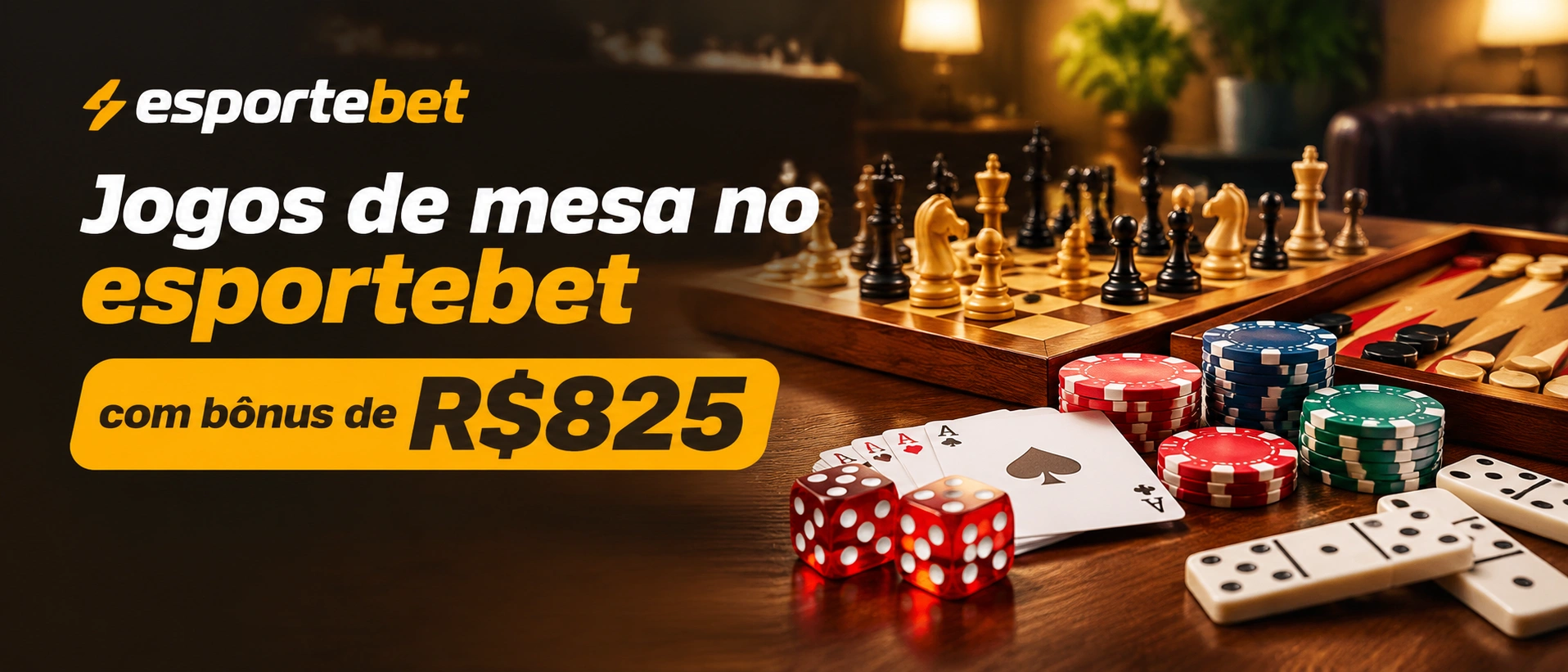
esportebet — Table games
Table games call for reading the rules, paying attention to the pace, and comparing formats before any decision.

Practical criteria for comparing tables

Before looking only at the game type name, it is worth observing how the table organizes the experience from start to finish. In some cases, the flow is more linear and easier to follow; in others, there are intermediate steps that require constant attention. This affects how plays are read, how available options are understood, and the sense of control while browsing. For those accessing by mobile phone, the visual clarity of the interface also matters a lot, because buttons, text, and indicators need to be easy to identify without effort.

Another useful point is noticing whether the table favors quick decisions or allows a calmer analysis between one round and the next. This difference changes the way the game is followed quite a bit, especially for those who prefer to observe patterns before acting. When the pace is fast, any distraction can get in the way of reading. In more measured tables, the focus usually stays on the sequence of actions and the interpretation of the specific rules of each round.

It also helps to compare the table’s level of complexity with the reader’s familiarity with the topic. There are games whose logic appears within the first few minutes, while others require more time to understand exceptions, combinations, and action limits. The more detailed the structure, the more important it is to read the instructions calmly. This reduces confusion and avoids making a choice based only on appearance or the popularity of the game type.

The way the rules are presented deserves special attention. A well-explained table usually makes it clear what happens at each stage, what the main elements are, and where the conditions that change the round are. When the explanation is vague, the reader may have difficulty following the full sequence. Therefore, before deciding, it is worth checking whether the description allows you to understand the table without relying on assumptions or rushed interpretations.

Another relevant aspect is observing how much continuous concentration the table requires. Some game types call for closer follow-up because each move influences the next reading; others tolerate short pauses without hurting understanding as much. This difference is important for those who want to fit the experience into their routine. The choice becomes more coherent when the format matches the available time, the desired level of attention, and the preference for simpler or more detailed games.

Finally, it is useful to separate the evaluation of the table from the expectation created by the game’s visuals or name. A good choice depends more on the actual structure of the game type than on the first impression. Reading carefully, comparing rules, noticing the pace of the round, and understanding the type of participation required are steps that help make a more mindful selection. In table games, this prior reading is usually the safest way to avoid impulse-based choices.

Editorial comparison between common casino paths

Not every game delivers the same experience. Some formats favor more direct rounds; others require more attention to the development of the round. The comparison below helps place table games in relation to nearby areas of the portal.

Category Editorial reading What usually interests the reader
Table games Focus on rules, pace, and table variations. Understand the dynamics before you start.
Slots Emphasis on mechanics, symbols, and volatility. Compare styles and visual themes.
Live casino Observation of the format with dealer and broadcast. See how the experience changes in real time.
Bonuses and promotions Reading the terms and the usage context. Understand what is being offered and under what terms.
1 Table games call for attention to the core mechanics and the clarity of the rules.
2 Slots are usually evaluated by theme, pace, and visual structure.
3 Live casino highlights interaction, broadcast, and table follow-up.
4 Bonuses and promotions require careful reading of the associated terms.

Practical reading criteria

When comparing table games with other casino areas, it is worth first observing the type of decision each format calls for. In tables, the reading usually goes through rules, sequence of actions, and round limits; in slots, the focus shifts to symbols, paylines, and visual dynamics; in live casino, the dealer’s presence and the smoothness of the broadcast come into play. This contrast helps the reader choose more clearly what matches their browsing style.

It is also useful to pay attention to the level of follow-up required in each path. Table games tend to reward those who follow the structure calmly and understand the table logic before acting. Other formats may be more direct in the initial experience, but they still call for careful reading of the context. This editorial comparison helps organize expectations and avoid treating different formats as if they worked the same way.

Long read: how to think about the experience in table games

When it comes to table games, the central point is not just the title of the game, but how the round unfolds. Some tables are almost immediate to read; in others, the flow calls for more patience and observation. For the reader, this means looking at the experience as a whole: rules, pace, interface, clarity, and context.

It also makes a difference to separate visual perception from actual functioning. A game may seem simple, but still involve decisions in sequence; another may have a more technical appearance and still be easy to follow. That is why editorial content needs to explain without romanticizing and without creating expectations of results.

Quick reading points

If the table requires constant attention, it is worth considering whether that format matches the time available. If the explanation of the rules is unclear, the best move is to look for a clearer guide. And if the proposal seems confusing, comparing it with other portal categories helps make the difference between each experience easier to see.

Step by step to get started more clearly

Before entering any table, it is worth following a simple path of reading and checking. The goal is to reduce doubts and make the choice more conscious.

  1. Read the explanation of the game type and identify whether the dynamics are based on luck, decision, or a combination of both.
  2. Open the related category page and compare the game with other similar options.
  3. Check whether the content offers enough context to understand the rules, pace, and possible variations.
  4. If there is still doubt, consult the contact material or responsible gaming content before moving forward.

Editorial criteria used to cover table games

The esportebet content prioritizes objective reading, accessible language, and a clear separation between information and expectation. In table games, this means explaining how the game works without promotional exaggeration and without promising outcomes.

Quality checklist

  • Direct text, focused on real understanding of the topic.
  • Useful comparisons with other portal categories.
  • No promises of winnings or results.
  • Guidance aimed at adults in Brazil.
esportebet — Sports
When comparing table games with slots and live casino, the reader better understands the role of each category.

Frequently asked questions about table games

Are table games always more strategic than slots?

Not always. Table games may require more reading of rules and following the round, but each format has its own logic. The correct comparison depends on the specific game type.

What should I look at first in a table?

Start with the rules, the speed of the round, and the clarity of the presentation. These three points usually say a lot about the experience offered.

Is it worth comparing table games with live casino?

Yes. In many cases, live casino helps you visualize the table dynamics better and understand how the experience changes in real time.

Where can I find related content on the portal?

You can go to pages about live casino, slots, bonus, promotions and responsible gaming.

English (Philippines)